Showing posts with label apple. Show all posts
Showing posts with label apple. Show all posts
Thursday, November 12, 2015
Few things iPhone 6S will come with !!

With just around a month to go for the next iPhone launch, we have rounded up some specs and features that we may see with the next Apple device.
1. Force Touch & New casing material

Force Touch is a brainy touch feature that senses the level of force applied on the screen. It uses tiny electrodes around the flexible Retina display to distinguish between a light tap and a deep press, which trigger instant access to a range of contextually particular controls. This feature adds the chance of embedding more gestures onto the device.
2. Better Battery Tech
The next-gen battery goes beyond the barrier of the conventional rectangular slab type and can take any shape. This battery consists of thin electrode sheets stacked on one another. These electrodes are cells of different sizes and are installed in the particular contours of the enclosure.
3. Revamped Interiors

As we can see in the pictures, the iPhone 6S is almost indistinguishable to both the predecessors in the terms of height and width. Differences in the internal mounting board also suggest of changes in chipset and quite a few more components.The rest of the components, like the lightning port, audio jack and speaker holes are in the same place as the iPhone 6.
4. 5 MP Facetime Camera

According to the leaks, the iPhone 6S will sport a 5 MP FaceTime camera, which is an upgrade from the 1.2 MP camera employed by the current version. Moreover, the rear camera will be upgraded to 12 MP from 8 MP, with 4K video recording capability. The phone will also be able to capture slow-motion videos at 1080p resolution, up from 720p in the current versions.
5. Samsung to provide chipset and displays for Apple's coming products

Samsung will be producing Apple’s core chip for the next iPhone as well as displays of other Apple products. This sudden alliance was formed when Apple Chief Executive agreed to tone down the battle of patent suits against Samsung, thereby leading to this association.

APPLE'S PROGRAMMING LANGUAGE SWIFT IS NOW OPEN SOURCED !!!!
Apple’s new launches at WWDC 2015 showed off many new features and capabilities of both the new iOS 9 and OS X El Capitan. However, the highlight of the evening was when Craig Federighi announced on the stage today that one of the most powerful coding languages, Swift, would become “Open Source”
Swift 2.0 adds a bunch of features that developers have been asking for, to ensure that apps written in Swift are faster and can do more.
“Open source” means that any developer, anywhere in the world, can contribute new features and updates to a software project — totally for free.

Google’s popular Android mobile OS, for example, is open source, which is how smartphone manufacturers can release devices with versions of Android that are slightly different from each other.
Does this mean other manufacturers will be able to make iOS devices – probably not. However with the code becoming open-source, bug fixes and features would develop faster. Swift becoming Open Source will also allow other operating system manufacturers including Google and Microsoft to utilise the features and apply them to their code if they so choose to.
This will allow Android forks like Cyanogen and MiUi to add enhancements to their performance and capability. However, this will also depend on inclination and need to do so from others.
Brand new iPhone 6 explodes

GURGAON: An iPhone 6 user in Gurgaon has alleged that his two-day old handset heated up and exploded during a call. But he escaped without injuries since he was using the hands-free mode.
It's the first such case reported in India since the launch of iPhone 6 here in October 2014. An Apple representative said the company was looking into the Gurgaon incident and it hadn't previously received any such complaint about the iPhone 6 in India.
But it's not unheard of either. According to media reports in the United States, a man in Long Island had complained this March that his iPhone 6 burst into flames in his pocket, causing third degree burns.

The Gurgaon incident allegedly happened on June 20 but came to light on Tuesday after the user — Kishan Yadav, a restaurateur — filed a police complaint and an FIR was registered.
Yadav claimed he bought an iPhone 6 from a leading mobile shop at Galleria market for Rs 60,000 on June 18 — a grey-coloured 64GB version. He thanked his stars that when the phone blew up a couple of days later, he was using the hands-free mode.
Yadav claimed he was in his car on MG Road talking to a friend whom he was about to meet when he noticed sparks in the phone. He said he threw the phone out of the car when he found the handset had become very hot and it exploded as soon as it hit the ground. "My face could have got burn as the phone exploded in a matter of seconds. When I threw the phone, the call was on and the battery was around 70%," said Yadav.
On Monday, Yadav took the phone to the shop he bought it from and was redirected to the Apple service centre. He claimed its staff suggested that he deposit the phone with them and they would get back to him with an update. Later, he filed a police complaint.
Moto’s Next Phone to Have a Solid Build and an Excellent Camera
In the world of mobile handsets, there are very few companies that manufacture phones which are well-built and at the same time, carry high-end specs. The biggest example of this would be the Apple iPhone. Excellent innards mixed with delicate hardware.

Motorola, on the other hand, has a long history of being a firm which produces viably sturdy handsets while keeping the device technologically updated from the software front. Recently, iGyaan got an official tip from the company that their new phone may be similar to their old Motorola Defy.
Released in January 2011, the Motorola Defy could resists water and dust. Its screen was tough and scratch proof, the construction super rigid and environment proof. The phone, at the time, came with a 3.7-inch display, 5MP camera and 1500mAh battery.
Imagine the aesthetics of the Moto Defy and the specifications of today – that’s what Motorola is planning to bring to the table.
This was supported by leaked images and a video of the upcoming what is could possibly be, the Moto X Third Gen, courtesy a Google+ leaker who goes by the name Neo Lee.
The video has been removed on YouTube, but can be viewed here on Google+. Nothing much could be made out from the video, as it simply showed someone scrolling through and reading the specs of the phone. The rumoured phone is expected to have a Snapdragon 410, a 5-inch screen, 1 GB RAM, 8GB storage + microSD expansion, a slightly better 13MP or 16MP rear camera, a 5MP front camera and LTE radio.

On the other hand, the new images reveal a good amount about the upcoming phone. A photo of the rear panel suggests the new smartphone carries forward Motorola’s design language, which includes the dual LED flash. The device is also operating on the latest version of Android (5.1.1 Lollipop). With the new third generation Moto X, Motorola is possibly working towards testing with glass and metal for its device, giving it a solid premium look.
The Moto X (3rd Gen) might have everything that it takes to be the best all-round device we can get from Motorola. With this, the new Motorola smartphone could stand up against the likes of Samsung and Apple.

Windows 10 Release Date
Microsoft had earlier announced that the consumer version of its newest OS. Keeping up its promise, the software major today announced the release date of its latest Windows iteration. The much-awaited operating system will be available to download on computers and tablets running Windows 7 and 8.1 from July 29th onwards. Windows-running smartphones are expected to receive an update later this year.
Terry Myerson of Microsoft stated in the official blog post –
On July 29, you can get Windows 10 for PCs and tablets by taking advantage of the free upgrade offer, or on a new Windows 10 PC from your favourite retailer. If you purchase a new Windows 8.1 device between now and then, the Windows 10 upgrade will be available to you and many retail stores will upgrade your new device for you.
Recently, the hardware and software giant commented on a blog post stating that Genuine Windows 7 and Windows 8.1 customers will be upgraded to Windows 10 for free and will continue receiving ongoing Windows innovation and security updates for the supported lifetime of that device. On the other hand, customers using pirated softwares have been recommended to purchase a licensed copy.
Microsoft is also sending a notification to genuine Windows users, clicking which, a slide show appears giving a slight glimpse of Windows 10. The new version brings back the Start Menu (that was missing in Windows 8), Continuum, a virtual assistant Cortana, the revamped browser Microsoft Edge that is fast and organised, and many other features. The software will launch in 190 countries.
Microsoft recently confirmed that there will be no Windows 11
Microsoft recently confirmed, that the firm is quitting the revision of Windows operating system and confirmed there will be no Windows 11. The company wanted perfection in the latest Windows as it aims to standardize Windows 10. Microsoft intends to make Windows a service. That means, instead of releasing versions of Windows every couple of years, they will be sending out regular updates to Windows just like Apple’s OS X.
APPLE IOS 9 RUMOURS

At this year’s WWDC, Apple made a string of announcements about its future. Especially Apple iOS 9 was seen to be a major overhaul. The company showed off the software’s multitasking feature, low power mode and Siri’s Proactive mode. However, Apple didn’t disclose many fresh apps and exciting features, which make its OS all the more seamless.

According to a new report, iOS 9 can delete apps temporarily to accommodate software updates. If the operating system is short of storage, it will prompt the user to temporarily delete the apps before installing the updates. After updates have been installed, iOS 9 will automatically re-install those apps.
The feature was discovered by developers who installed the new beta version of iOS 9, as per a report by 9to5Mac. According to the report, the data will remain intact.
One of the main criticisms of iOS 8 was the amount of exorbitant space it took for installing updates. To make up for it, Apple announced at 2015 WWDC that the new iOS would only require only 1.35 GB of space, a huge improvement from iOS 8, which used 5.5 GB. The announcement was a relief to the iPhone users who use the 16 GB variant.
With iOS 9, Apple is making efforts to utilize the storage space. At WWDC, Apple mentioned that developers will be able to “thin” their apps, freeing up more storage for media and other content.
9 Supercool Features of Microsoft Windows 10
 |
| #MicrosoftWindows10 |
Last night, Microsoft lifted the veil off the consumer version of its much-anticipated operating system Windows 10. The event saw some amazing offerings that were absent in the business version of Windows 10, launched in September the preceding year. Microsoft announced that its new upgrade would be same on all platforms and would be more user-friendly and impressive that ever before.
We have summed up Top 9 features that make Windows 10 unique-:
1. Start Menu

To start off, Microsoft has added the much-needed tool that was absent from Windows 8 and 8.1 – the Start Menu. People longed to see this on their desktop for past three years, and finally Microsoft has put it back. The new Start menu combines the old-school start icon along with the modern user interface that makes it more comfortable for users to go through.
2. Action Center

Settings have tweaked, to give a cleaner and more understandable look. Windows 10 pushed the fragmented Settings menu and Control Panel out to encompass a unified settings menu called Action Center. Action Center brings together all the frequently used options like Wi-Fi, Bluetooth and more. The refreshed settings shelter all the regular buttons, through which one can instantly switch the Wi-Fi, Bluetooth and other selections on and off.
3. Continuum

Continuum is a highly anticipated addition to the Windows 10. Continuum is just like Apple’s Continuity feature that allows you to switch from PC to mobile or tablet from where you left. The feature is designed specifically for convertible devices, switching almost instantly from a mouse and keyboard to a tablet screen.
4. Notifications Sync

5. Cortana

The special feature that separates Windows 10 from its predecessors is the intelligent personal assistant Cortana. Cortana will serve as a primary search tool that will look for you. Its reminder capabilities are unparalleled. Not only this, Cortana is much more than a simple robot. Through Cortana you can interact with the device making lif very easy on the go.
6. Universal Windows Apps

7. Project Spartan

8. Xbox Live

There is something for hardcore gamers as well. With the new Xbox app, Xbox Live, on Windows 10, gamers can chat with their pals, share browsed video game clips and can record their games as well. The app also enables you to edit videos as per your willing.
9. Improved Design and Interface

Microsoft Windows 10 Official Makes Apps Universal
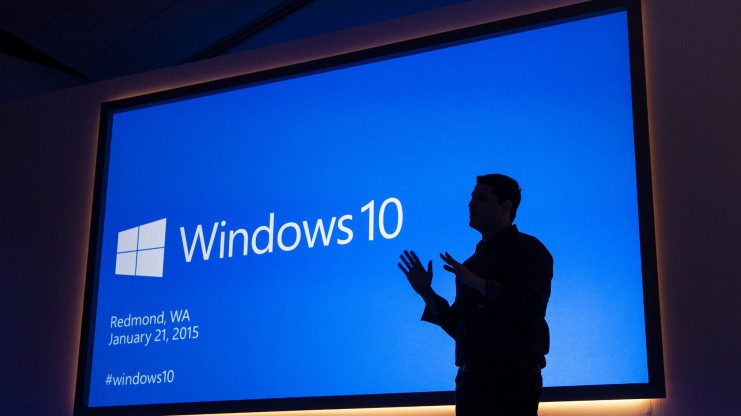
Microsoft has taken the curtain off the next version of the largest used OS aka Windows and just like rumors suggested they skipped the 9. The next version of Windows aka Windows 10.
Microsoft has followed in the lines of Apple and mostly Mobile methods by making an upgrade to Windows 10 free for all Windows 7, Windows 8.1 and Windows Phone 8.1 users. Calling Windows mostly a service and not a product.
 |
| #Windows10 |
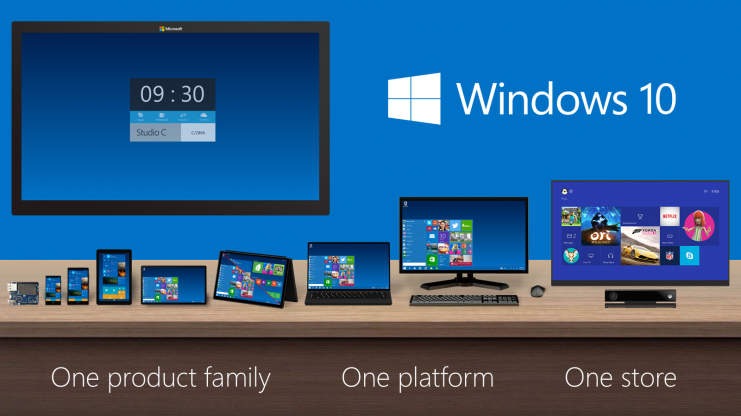
The biggest news that fits into the picture is the seamless integration with Apps across hardware segments, Microsoft has been gunning for this and with Windows 10 it may have become more of a reality.
Now coders will have to make one app which will work across platforms including mobile, tablet and PC.
The new version of Windows will also come with voice assistant “Cortana”. The center of the Cortana experience is housed in the “Notebook”, which should be familiar with those on Windows Phone. Opening this Notebook will show you just what she knows about you.
You can do voice search as well as voice to text typing, which will be a much appreciated add-on.
With previous version of Windows leaving everyone complaining, Microsoft execs are pretty much sure that they have rebuilt their OS from the ground up, and unlike Windows 8 it is not a hasty decision or rollout.
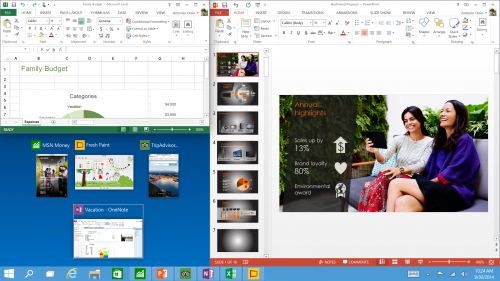
Along with Windows 10 Joe Belfiore demonstrated new versions of Powerpoint and Outlook for a better productivity experience.
Xiaomi: Unveils its New Flagship Device Mi Note
 |
#MiNote World’s third largest smartphone maker, Xiaomi took a great leap in order to challenge the likes of Apple, Samsung and OnePlus with the new 5.7-inch phablet called the Mi Note. Many expected the Chinese manufacturer to launch the second generation Redmi Note or the Mi5, but instead the company decided to take a step ahead and launched the Xiaomi Mi Note. The new device flaunts a 5.7-inch 1080p display and seems to be Xiaomi’s contender against the OnePlus One (with a price to match). The device is powered by a Snapdragon 801 processor and comes with 3 GB RAM. The phablet will be available in 16 and 32 GB variants. The company has also launched a Pro version of the Mi Note which is powered by 64 bit Snapdragon 810, comes with 4GB of RAM and has a 64GB version only. The pro version flaunts an enticing 2560×1440 at 515ppi screen (2k display). Both are powered by a 3000mAh battery. The devices also sport a 13MP main camera with Optical Image Stabilization (OIS) and a 5 MP front facing selfie camera. They run on MIUI 6, which is based on Android 4.4 KitKat. The Mi Note and Pro are 7.1 mm thin and weigh 161gm  |
Mi Note is protected on both sides with 2.5D + 3D curved Gorilla Glass 3. According to the company, it’s highly resistant to scratches and shattering.
Xiaomi has become the world’s fastest growing smartphone manufacturer swelling its shipment three times last year. The new Mi Note will compete head to head with OnePlus’ One which was launched last year.
There is no doubt the company has a strong hold on the tech market, however, Xiaomi is still struggling with the idea of breaking into the western market. With the launch of Mi Note, we can expect the Chinese smartphone giant to break free from the Asian market and focus on a more global scale.
The Xiaomi Mi Note will retail for 2,299RMB, which is about $371 or Rs. 22,893, while the Mi Note Pro is priced for 3,299RMB, which is about $532 dollars or Rs. 32,800.
Apple's Upcoming 12-inch MacBook Air May Feature Touch ID Fingerprint Scanner
 |
| #MacBookAir |
The highly anticipated next generation MacBook Air is said to boast a 12-inch display along with Intel Broadwell chipsets, but its other specs are still behind the veil. A Taiwanese website Apple.club.tw has made an announcement that the Cupertino-based giant will embed the future MacBooks and desktops with Touch ID fingerprint scanner. This includes the rumoured 12-inch MacBook Air as well.
According to the source, Apple will infuse the Touch ID in the trackpad of the purposed 12-inch laptop and next-gen MacBook Pro. As for desktops, the fingerprint scanner is likely to be implanted in the Magic Mouse or Magic Trackpad.

The website also stated that the next sleek and thin MacBook Air may come in three colour variants – silver, space grey, and gold. The colours may remind you of the last released iPhones and iPads.
Meanwhile, it should be noted that these are just rumours, and the company hasn’t come forward with any statement confirming these reports. If the speculations turn out to be true, then it may give a push to the company’s payment system, Apple Pay. The users will be allowed to make safe online purchases using Apple Pay. The mobile payment, as for now, is limited to the two top-end handsets, the iPhone 6 and iPhone 6 Plus. In future, it will be compatible with iPhone 5 series when paired with Apple Watch.
The reported 12-inch MacBook is said to be thinner than its predecessor and will come with a Retina display. It is expected to launch this year by the end of the second quarter.
APPLE BEGINS MANUFACTURING THE NEW IPHONE WITH ‘FORCE TOUCH’
According to a new report, Apple has started the manufacturing process for the new iPhone. We’re talking about the iPhone 6s which will be arriving this September. The Force Touch feature, first introduced in the Apple Watch and the new 13-inch MacBook, has been expected to be included in the new iPhone for a few months now.
‘Force Touch’ is a feature that detects the level of force in a tap and responds accordingly. For example, a light tap on the screen will perform another task than a hard tap. Tiny electrodes surrounding the Retina display sense the difference in the amount of pressure applied on screen. Thus, a user can perform simple tasks such as fast-forwarding a movie or using pressure to zoom in on a map with ease.
Apple begins production from the first of July. The company expects the production to go smoothly due to the similarities in design between the new and existing iPhone 6. Apple has spent more than two years trying to perfect ‘Force Touch’, which will enhance the user experience when using pressure-sensitive displays.
Earlier this month, it was reported that the next-gen iPhone would be thicker than the existing iPhone due to the integration of ‘Force Touch’ feature. Also, Apple is reportedly integrating support for the feature in the beta versions of iOS 9, which will allow developers to make use of ‘Force Touch’ in navigation and media controls.
Apple Pay coming to UK !!

Apple Pay will soon be live in the UK. The contact less payment system will launch across the pond on July 14th and will work with the iPhone 6 and 6 Plus, as well as the Apple Watch. A leaked internal document from an unnamed British retailer, as well as a report from 9 to 5 Mac's Mark Gurman point to that date. The report cites "sources at multiple retailers" and Apple retail employees.
Apple first announced that the service would come to the UK back during WWDC last month. At the time, the company merely said that it would launch sometime in July.

At launch, you'll be able to use Apple Pay at over 250,000 payment terminals across the nation. Tap-to-pay systems are already installed in many stores across the UK, and those systems are already compatible with Apple Pay. A number of banks are already on board as well, including HSBC, Santander, Natwest, Nationwide, First Direct, and others. Apple Pay will also work around the London transport system.
Like in the US, Apple Pay will use NFC to transmit data to payment terminals and will authenticate purchases with Touch ID. The UK marks the first international market for the system, and Canada is expected to join the fold this fall.
When will Instagram grow up?
This past Tuesday, the eastern United States got to enjoy a particularly dramatic sunset as clusters of stormclouds were lit up by the fiery radiance of the fading sun. It made for some beautiful photography, much of which ended up on Instagram. This seemed like the perfect occasion to showcase the brand new Instagram update — designed to encourage even more sharing around highly visual moments and events — but the thing that stood out to me was the size of the images. In today’s high-resolution world, 640-pixel-wide Instagram photos are starting to look and feel like an anachronism.


Instagram continues to be one of the world’s foremost social networks, allowing for quick and easy visual interactions between people all over the world. If all you want to do is let your friends know what you’re doing, seeing, or experiencing, the small image size of Instagrams is quite adequate. You see a burning sky, you Instagram it, I see your photo, I "like" it, and we both move on with our lives slightly enriched. The burgeoning popularity of Snapchat is based on precisely that sort of ephemeral communication.
MOBILE PHOTOGRAPHY HAS MATURED AND INSTAGRAM HASN’T KEPT UP
But the latest version of Instagram suggests the Facebook-owned company wants to be more than that. Instagram 7.0 adds handpicked collections — which organize the chaos of new imagery around particular moments — and new structure to turn the app into a real engine of discovery for cool photographers, places, and events. Instagram is also collaborating with Getty Images on a grant program to encourage its users to "document stories from underrepresented communities around the world." These efforts show the photo-sharing app’s aspirations to be more than a mere communication tool. In the words of its co-founder and CEO Kevin Systrom, Instagram is "creating a record of the world, a history of the world."
THE BETTER THE PHOTO, THE GREATER THE FRUSTRATION OF ITS MEAGER SIZE
When I browse through Instagram’s record of that glorious East Coast sunset, I’m invariably frustrated by the meager size of its images. They feel like thumbnails, mere hints of what was, rather than full representations. Half a decade ago, when Instagram was getting started, low resolution and image fidelity were the norm for mobile photography: Instagram’s filters and size constraints were then helpful in obscuring image defects and beautifying dull scenes. But the technological limitations of slow mobile connections, mediocre cameras, and cramped displays are not as prevalent as they once were, and there are now millions of powerful cameraphones that are essentially being handicapped by Instagram’s limitations.
It’s not just mobile cameras that have seen their resolution and quality rapidly advancing over the past few years. Mobile displays are now greatly improved as well. The iPhone 6 has a resolution of 750 x 1334, so an Instagram photo doesn’t have enough pixels to even fill its width. This year’s Galaxy S6 and LG G4, sharing a resolution of 1440 x 2560, also have displays capable of showing so much more detail than Instagram provides. Similar resolutions can be found across tablets and laptops from all manufacturers now, and Apple just discontinued its last non-Retina iOS device. At this point, the only mobile devices on which Instagram has more than enough pixels to fill the screen are smartwatches.
TO BE TAKEN SERIOUSLY AS "A RECORD OF THE WORLD," INSTAGRAM SHOULD CONSIDER THE DEVICES THAT RECORD WILL BE VIEWED ON
Some might regard Instagram’s 600-something pixels as the visual equivalent of Twitter’s iconic 140 characters, but I don’t think the analogy is apt. Twitter enforces brevity of speech, which can help distill a message to its essential elements, but the same complexity is not true of images: bigger, more detailed pictures are simply better. They certainly make for a better and more useful record. Zooming in on a full-size original reveals otherwise undetectable contours and small details that are lost in the quick and dirty 640 pixels of an Instagram.
If Instagram wants to be taken seriously as a repository of images that document the world’s events and places, it should at least give us a few more sizes to choose from. The best it offers right now is the option to save a 2048 x 2048 copy of your filtered photo to your device — the stuff shared out to the world remains a compressed 640 x 640 version of the image. With the might of Facebook behind it and tens of millions of advanced smartphones with great cameras out in the world already, Instagram has every reason to evolve and mature to keep pace with improvements in mobile photography. Much like the 4-inch iPhone last year, this photo-sharing app remains enduringly popular despite its size disadvantage. And much like the larger iPhone 6 and 6 Plus that have followed, an Instagram that embraces bigger images has the potential to blossom into even greater popularity.
To move with the times, Instagram doesn’t have to abandon its heritage of speed and ease of use; it just needs to harness the greater capabilities of today’s mobile devices. Keep the Instagram of old, but give us the option to go beyond the artificial 640-pixel barrier in order to make full use of the high-resolution cameras and displays in our pockets.
Oh, and how about an iPad app?
Corning Gorilla Glass 4: May Finally Make Your Phone Drop-Proof
Apple’s plans for a super-durable sapphire iPhone may have fallen flat, but that doesn’t mean your next smartphone can’t be shatter-proof. According to Corning, the latest version of its protective Gorilla Glass should keep your phone intact even if hits the ground face-first.
Gorilla Glass 4 passed Corning’s meter-high drop test about 80 percent of the time. That’s twice as good as Gorilla Glass 3, though it still means your screen could shatter about 20 percent of the time. The company adds that there are no drawbacks to the improved material. It looks just as good as before and is just as resistant to everyday scratches and scrapes.
Gorilla Glass is pretty much the industry standard at this point, finding its way into the latest devices from Samsung, LG, HTC, Motorola and Microsoft. Even Apple uses a strengthened version of the material to protect the iPhone 6 and iPhone 6 Plus. Corning says the improved glass is already shipping to some companies, so it shouldn’t be too long before a new generation of drop-proof smartphones hit the market.
 |
| #GorillaGlass |
Gorilla Glass 4 passed Corning’s meter-high drop test about 80 percent of the time. That’s twice as good as Gorilla Glass 3, though it still means your screen could shatter about 20 percent of the time. The company adds that there are no drawbacks to the improved material. It looks just as good as before and is just as resistant to everyday scratches and scrapes.
“Corning Gorilla Glass has outperformed competing materials, such as soda-lime glass and other strengthened glass, since it was introduced in 2007, and we’re always innovating to push the limits of what glass can do”, said James Steiner, SVP and General Manager at Corning.
Meanwhile, Corning testing charts reveal that the new GG4, at a thickness of 0.4 mm, can withstand higher drops than GG3, which has a thickness of 0.7 mm. This makes the GG4 more durable and apparently thinner than its earlier models.
Gorilla Glass is pretty much the industry standard at this point, finding its way into the latest devices from Samsung, LG, HTC, Motorola and Microsoft. Even Apple uses a strengthened version of the material to protect the iPhone 6 and iPhone 6 Plus. Corning says the improved glass is already shipping to some companies, so it shouldn’t be too long before a new generation of drop-proof smartphones hit the market.
Xiaomi: Announces Mi Box Mini and Mi Headphones
Chinese smartphone powerhouse, Xiaomi has kicked off the year with the launch of its new flagship, the Xiaomi Mi Note. Going much further than its predecessors, this device directly takes an aim at the big name flagships and as usual comes with an extremely competitive price tag, although still higher than the usual Xiaomi pricing. The device packs some exceptional specs and the Pro version goes on to challenge the smartphones on the top of the food chain.
At the stage, Xiaomi founder and CEO, Lei Jun stated “We want to be the biggest phone company in the world,” and they delivered their products accordingly. It has expanded its portfolio to challenge the dominance of big brands with this launch event. So let’s take a look at all the other products that Xiaomi has unleashed today from its stage that got overshadowed by the awesomeness of the new Mi Note and Mi Note Pro.
Mi Headphones
 |
| #MiHeadphones |
Apple bought Beats and Xiaomi, as always following footsteps, launched its own headphones. They have dual 50 mm drivers and exchangeable ear cups.
In true Xiaomi fashion, these headphones are priced at 500 Yuan or about Rs. 5000. The Mi Headphones look attractive but we can only be sure about their quality when we put them to test.
Mi Smart Home App

Xiaomi began with explaining its plans to enter into the smart home market where the smartphone will be command center. The company offers a Smart Home App which connects all the appliance with one app.
Xiaomi has invested RMB 1.26 Billion($203 Million) in home appliances company Midea last December, to take its smart home objective forward.
Mi Box Mini
 |
| #MiBox |
The next launch was the Mi Box Mini which is a tinsy tiny set top box from Xiaomi. This device is powered by a quad-core 1.3GHz processor along with 1GB RAM. It has 4GB internal flash memory and supports 1080p resolution along with Dolby and DTS audio and dual band Wi-Fi and Bluetooth.
So overall Xiaomi did what it is known for and it sure was a good show. Now that the products are out, get ready for a long line of speculations about their date of arrival on the Indian shores. Xiaomi does consider India an important market, but it may consider releasing these devices in India only after it gets out of the legal hassles it is facing in the country.
Tech Giants: Google Android Lollipop 5.0 vs Apple iOS 8.1
The two major mobile operating systems have seen some of the biggest updates in years hit in 2014 but with iOS now full of third-party keyboards, and Android with a new lick of Lollipop-flavoured paint, the question has to be asked, how do they stack up against each other?
App Ecosystem
After core functionality, almost everything you do with your smartphone will be dictated by what apps are available for your operating system of choice. Both Android 5.0 and iOS 8 have the advantage of mature, years-old app stores with untold millions of third-party apps just waiting to be downloaded. For almost every single important app you can care to mention (or want to download, for that matter), there's both an iOS and Android version.Apple's OS still has one major advantage, though: "Android version coming soon". That's the tagline we see daily on any number of the app pitches that get force-fed through our tips line. It's a reflection on the fact that, while all apps end up on Android eventually, they almost always launch on iOS first. If you're an early adopter of tech, this can be a major consideration. It took months for Uber, for example, to bridge the gap and you wouldn't want to be stranded far from a kebab shop with no way of getting home, after all.
Look and Feel
Overall, both iOS 8 and Android Lollipop have fully embraced a more flattened, minimalist design that the skeuomorphism of earlier years. For Android, this is a big departure from previous editions: it's the first time a version of Google's OS has been built under the new regime, 'Material Design'. Many of the fundamental underpinnings are new, an updated typeface, bolder colours and more use of animations all add together to give a completely new, sleeker, more modern user-interface.
For iOS, however, almost nothing is changed in iOS 8. Flat design was introduced in iOS 7 a year ago, and very little has been updated, with Apple's latest operating system retaining the clean, rolling-pin-treated look.
Lockscreen
Android L brings a new lockscreen, both in terms of aesthetics and functionality. Notifications are now big, swipeable bars, in line with the theory of Material Design, and the swipe-unlock actions have been simplified. Android's always had the ability to launch straight into apps, depending on which direction you swiped to unlock; but Lollipop has tightened this up, and you now just have the option to swipe up to unlock, right for the dialler, or left for the camera. That's broadly similar to iOS, where there's an icon that will launch you straight into the camera without having to faff-about with a passcode.
Also notable are the various unlock mechanisms. One of Apple's flagship features is TouchID, which, on a compatible iPhone (5S or upwards), or one of the new iPads, lets you unlock devices with just a fingerprint. Android doesn't have support for a fingerprint scanner baked in, but it does offer facial recognition unlock. From my testing, I've found it to be almost as fast as TouchID, albeit only in good lighting.
Android L also includes the option to unlock devices automatically, based on your location and what Bluetooth devices are connected. This is similar to the 'trusted devices' feature that debuted on the 2013 Moto X, and should be handy for any smartwatch owners.
Notification System
Android Lollipop sees an overhaul of the notification system, with pop-ups ordered by priority on the home screen, and also pushed to you in a banner form when you have the phone open. Apple hasn't been sleeping, though, and iOS 8 introduces interactive notifications that let you action them (reply/dismiss) straight from the notification. The pull-down notification itself has also seen an overhaul, with apps capable of sticking widgets in there.
Personal Assistant
Both Android and IOS now feature voice-command systems that can be activated just by saying a key phrase: either 'OK Google' or 'Hey Siri', depending on the phone. Both work pretty well, and in natural language: so you can ask "what will the weather be like tomorrow in London", and get a coherent (if not entirely accurate) response. Google's replies are, statistically, a little more useful and accurate. Perhaps the biggest difference is that iOS devices have to be connected to a power source to use the 'Hey Siri' feature, something that isn't true of Google's assistant.
Customisations
iOS 8 saw one of the most-demanded features come to Apple's platform: third-party keyboards. You can now download and install all manner of add-on keyboards for iOS: either to replace the stock keyboard with excellent alternatives like Swiftkey or Swype or to download a GIF keyboard to irritate your mates.
Android, of course, has had this ability for years; indeed, all the keyboard makers who have designed a keyboard for iOS have cut their teeth (and honed the design) for years over on Android's platform.
Android 5.0 still retains the edge in customisation, though: whereas you're stuck with Apple's homescreen and general design on iOS, Android lets you download and install custom launchers or custom app icons, so you can literally tweak to your heart's content.
Smartwatch Compatibility
Both Google and Apple have smartwatch ambitions at play. In Google's case, this is via the Android Wear platform, which is already onto its second generation of beautiful hardware. Apple also has a smartwatch, coming out in the spring, probably for a little more moolah than the Android Wear offerings. Either way, the smartwatches need compatible smartphones in order to work, and guess what? And Android Wear watch will only play nice with a 'droid, and Apple Watches are limited to iPhones.
Cross- Platform Compatibility
Both companies are also taking a stab at cross-platform compatibility: being able to pick up where you left off with your phone on your desktop. Apple does this through 'continuity', a series of features that make your iOS and OS X devices talk to each other. This means that you can pick up phone calls on your Mac, or check out a webpage you were browsing on your iMac on your iPad. It's a brand-new feature, which only went live with the launch of OS X Yosemite, but thus far, it seems pretty slick.
Although Google only barely has a desktop operating system (Chrome OS), it does have a big share of the desktop-browser market, which lets it execute much of the same functionality. Messages are synced pretty well, provided that you use Google's Hangouts app; and there's even the option to sync SMS and phone calls, thanks to Android apps like Mighty SMS.
Subscribe to:
Posts (Atom)